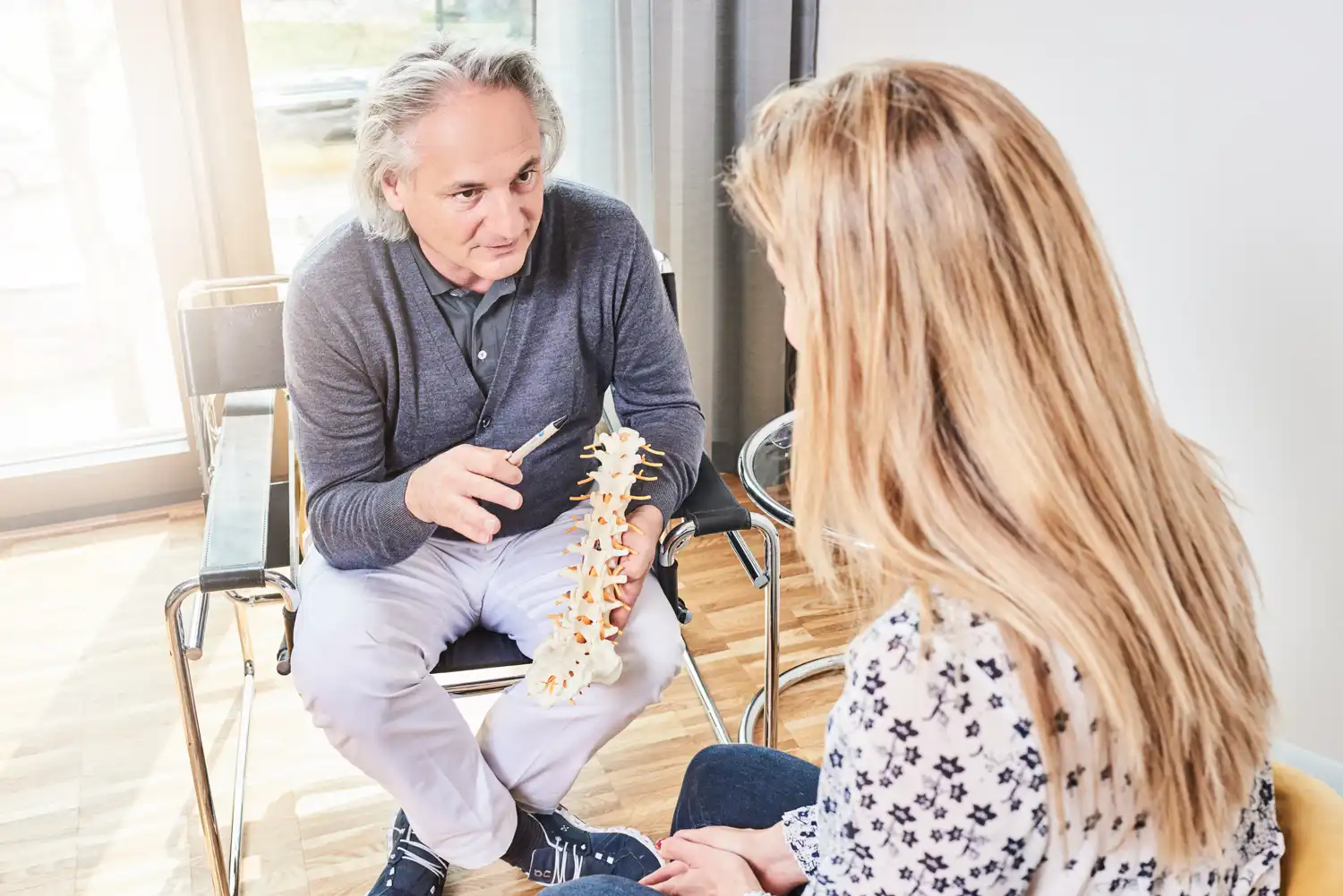
Back pain is one of the most common reasons for physical limitations in everyday life. Many sufferers initially hope that the symptoms will disappear on their own. However, if the pain persists again or lasts longer than 3 months, it can develop into a complex pain syndrome.
It becomes particularly problematic when back pain is no longer just a temporary alarm reaction of the body, but increasingly reduces mobility, endurance, and quality of life. At that point, it is worth taking a closer look and specifically identifying the causes.
In this article you will learn when pain therapy for the back is necessary, how diagnosis and treatment proceed, and why a comprehensive treatment approach is often crucial when persistent symptoms persist.
The most important information on pain therapy for the back
- Back pain can be caused by various factors such as lack of exercise, prolonged sitting, improper posture, stress, or changes in the spine. If the symptoms are not treated, the risk of pain becoming chronic increases.
- Pain therapy for the back begins with precise diagnosis. The goal is to identify the actual cause of the pain and, based on that, develop a treatment plan.
- Depending on the complaint, different treatment methods are available, including physiotherapy, exercise therapy, medication, intervention procedures, or specialized approaches for chronic pain.
- In the case of long-standing complaints, multimodal pain therapy may be appropriate. By combining different specialist areas and therapeutic approaches, it is often possible to reduce pain and improve quality of life.
1. Why back pain doesn't go away on its own
Back pain is one of the most common health complaints in Germany. Women are particularly affected. Estimates show that around 15 to 17 percent of women and about 12 percent of men suffer from persistent back pain. Many sufferers endure the symptoms for months or even years, even though early treatment can help prevent a chronic condition.
What lies behind persistent back pain
Not all back pain is the same. Acute back pain often occurs suddenly, for example due to unusual strains, heavy lifting, or a short-term irritation of muscles and joints. In many cases, these symptoms subside within a few weeks.
However, if the pain persists for an extended period or occurs repeatedly, experts refer to it as chronic back pain. Then it often no longer involves just a single source of pain. Rather, various physical, psychological, and everyday factors can interact, permanently maintaining the symptoms.
What is particularly problematic is so-called pain chronification. This involves changes in the processing of pain in the nervous system. The pain memory can be activated, which means that pain can persist even when the original cause has long since healed. That is precisely why it is important to have persistent complaints checked early and not ignore them over the course of months.
The most common causes of back pain
Back pain can have numerous causes. Often, not a single trigger is responsible, but rather the interplay of several factors that cause stress.
The most common causes include:
- Lack of exercise and prolonged sitting
- Stiffness and unilateral loads
- Heavy lifting and repeated physical strain
- Disc herniation and degenerative changes of the spine
- Arthrosis and age-related wear and tear
- Obesity as an additional burden on the back area
- Muscle tension in the back and neck
- Stress and mental stress that can worsen pain
Back pain often arises due to several factors simultaneously. It is therefore all the more important to identify the actual causes, rather than solely treating the symptoms.
What consequences untreated back pain can have
If back pain persists for an extended period of time, it can have far-reaching effects on daily life. Many sufferers become increasingly reluctant to move due to fear of pain. This reduces the body’s ability to function, while muscles weaken and postural abnormalities develop.
Typical consequences of persistent complaints are:
- Restrictions on work, family and leisure time
- Decreasing mobility of the spine
- Muscle loss due to habitual behavior
- Growing uncertainty regarding movements
- Restricted physical activities
- Sleep problems due to persistent pain
- Reduced quality of life and enjoyment of life
The longer back pain remains untreated, the greater the risk of it becoming chronic. Early pain therapy can help break this cycle and prevent long-term consequences.
2. Pain therapy for the back: This is how diagnosis and treatment proceed
Anyone suffering from persistent back pain often desires one thing above all else: a rapid improvement in their condition. However, in order for pain therapy to be aligned with the desired results in the long term, it is first necessary to understand what causes the symptoms in the first place. That is why every treatment begins with a thorough diagnostic evaluation. The goal is to identify the actual cause of the pain and not merely treat the symptoms.
Why proper diagnosis is crucial
Back pain has many different causes. Complaints in the lumbar spine area can, for example, stem from herniated discs, spinal joints, muscles, or a irritated nerve root. Often, the painful area is not the actual source of the problem.
Therefore, a special pain therapy begins with a comprehensive history of symptoms. This includes identifying when the pain occurs, how long it has persisted, and what triggers or movements aggravate or alleviate the symptoms.
Subsequently, a physical examination follows. This includes assessing mobility, posture, muscle tension, and possible functional disorders of the spine and the entire musculoskeletal system. Additionally, existing MRI or CT findings are evaluated and compared with the current complaints.
All the information is then used to create a „pain map“. This shows which factors are involved in the pain process and how various complaints are related to each other. Especially in the case of chronic back pain, this cause analysis often provides important clues for further treatment planning.
In this way, the source of the pain is narrowed down.
Special pain therapy requires that the actual causes of the pain be identified as precisely as possible. To do this, not only individual findings are considered, but the entire pattern of symptoms is analyzed.
Among other things, the focus is on:
- Possible irritation of a nerve root
- Changes in the discs of the spine
- Complaints of the spinal joints
- Muscular imbalances and incorrect loads
- Interrelationships between different pain regions
- stress-related and social environmental factors
In certain cases, diagnostic infiltrations can be used. In this procedure, a specific structure is anesthetized selectively using imaging techniques. Subsequently, if the pain changes, the actual sources of pain can often be more precisely identified. In this way, unnecessary treatments can be avoided and therapies can be planned more specifically.
These treatment methods are suitable
As soon as the causes of the complaints are known, a personalized treatment plan is created. Which therapy is suitable depends always on the respective findings and the respective factors of stress.
Common treatment methods include:
- Medications: They can reduce pain and create the basis for further therapeutic steps.
- Physiotherapy: The goal is to improve mobility and correct any strains caused by overexertion.
- Movement therapy: Targeted exercises restore the resilience of the back.
- Strength training: A stable musculoskeletal system relieves the spine and can reduce symptoms in the long term.
- Relaxation exercises: They help reduce muscle tension and stress-related strain.
- Interventional procedures: These include, for example, targeted injections or PRT (periradicular therapy) to treat irritated nerve structures.
- Psychoeducational procedures and relaxation techniques.
In the case of certain chronic pain conditions, specialized procedures such as neuromodulation may be considered. In this procedure, the transmission of pain signals in the nervous system is specifically reduced. This form of therapy is primarily used when conservative measures do not yield the desired results.
An important principle of modern pain therapy is that not every change in the spine needs to be surgically corrected. In many cases, symptoms can be effectively relieved through conservative treatment methods. Only when these options are exhausted or when certain medical reasons exist should surgery be considered.
3. When multimodal pain therapy is necessary
Not all back pain can be permanently improved with a single treatment. Especially in the case of chronic back pain, it is often the case that various causes play a role simultaneously. In addition to physical changes in the spine, for example, lack of exercise, stress, incorrect posture, or prolonged strain can contribute to the persistence of symptoms.
Therefore, individual forms of therapy often reach their limits. Painkillers can provide short-term relief, but they do not address the underlying causes. Physiotherapy alone is not enough when additional psychological stressors or unfavorable behavioral patterns influence the pain process.
Chronic pain rarely results from a single trigger. Often, various factors interact and reinforce each other. For example, pain leads to a reduced level of activity among those affected. The reduced activity can, in turn, promote muscle loss, postural abnormalities, and other discomforts.
In addition, physical and psychological factors are closely interconnected. Those who experience persistent pain often experience stress, sleep problems, or uncertainties in daily life. At the same time, these stressors can further intensify the perception of pain. This creates a cycle that is difficult to break through without targeted support.
This is where multimodal pain therapy comes in. It combines different treatment approaches and views the person as a whole, rather than just considering individual symptoms.
Depending on the nature of the complaint, various components can be used:
- Medical treatment, to specifically alleviate pain and support the therapy
- Physiotherapy, To improve the mobility and function of the musculoskeletal system
- Movement therapy, to make the body more resilient again
- Behavioral therapy and psychotherapy, to strengthen the ability to manage pain and to change distressing behavioral patterns
- Interdisciplinary collaboration between different departments, So that all relevant factors are taken into account
This approach creates a treatment program that is tailored to the individual situation of the patients.
The goal of multimodal pain therapy is not solely pain relief. Rather, the goal is to reduce symptoms in the long term and to enable those affected to regain more independence in everyday life.
These include, among others:
- Permanently reduce pain
- Improve mobility and physical endurance
- Reclaiming confidence in your own body
- They facilitate active participation in professional and family life
- Quality of life and enjoyment of life increase
- Counteracting further pain chronification
Multimodal pain therapy is now considered one of the most important approaches for chronic back pain. By combining different treatment methods, physical and psychological influencing factors can be taken into account simultaneously.
5. How to recognize good pain therapy
Anyone who has been suffering from back pain for a long time has often already tried various treatments. It is all the more important to find a provider who does not view complaints in isolation but puts the actual causes at the center. Good pain therapy is not characterized by the use of the most extensive range of measures, but by a clear treatment approach.
Patients should pay special attention to this
Not all pain therapy follows the same standards. The following characteristics indicate that appropriate treatment is available:
- Detailed investigation instead of a quick solution: Persistent back pain requires time for precise diagnosis and cause analysis.
- Adapted treatment plan: The therapy should be tailored to the individual situation and the specific complaints.
- Specialized doctors: Having the additional designation “Special Pain Therapy” by the treating physicians is particularly crucial in the case of chronic pain. Certification as a pain therapy facility by the Medical Chamber also provides insight into the experience and qualifications of the therapists.
- Experience with complex pain patterns: Chronic back pain often requires different approaches than acute complaints.
- Collaboration of various specialists: The best results often arise when several departments work together.
Especially in the case of persistent or chronic back pain, it is worth taking a closer look. A specialized back center or a practice that specializes in specialized pain therapy not only considers individual symptoms, but the entire pain process.
Important features include:
- A look at all the complaints
- Modern diagnostic and therapeutic procedures
- Tailored therapy planning instead of standard treatment
- Focus on the cause of the pain instead of purely treating the symptoms
- Demonstrable qualifications as well as experience with chronic back pain and pain chronification
The better the causes are understood, the more targeted the treatment can be. This not only increases the success rates of therapy but can also avoid unnecessary interventions or surgeries.
This is where the Schmerzwerkstatt München comes in. Instead of considering complaints in isolation, the various factors influencing the occurrence of pain are systematically analyzed. This is based on an extensive diagnostic process aimed at identifying the actual cause of the pain and deriving a treatment plan from it.
Do you suffer from persistent back pain and would like to have the causes specifically investigated? Book your appointment now at the Schmerzwerkstatt Munich and get advice!
That is why many affected people choose the Pain Workshop in Munich
Persistent back pain often has more than one cause. That is why pain therapy is all the more important; it not only considers individual symptoms but also identifies the underlying causes behind the complaints. This is exactly what the Schmerzwerkstatt München specialises in.
✔ 30 years of experience in the treatment of pain, Also in the case of long-standing or complex complaint processes
✔ Specialization in chronic back pain, With a focus on the causes rather than on short-term symptom management
✔ Comprehensive diagnostics and pain analysis, so that complaints can be targetedly organized and handled
✔ Personalized therapy planning instead of standard concepts, Tailored to your complaints, goals, and daily stresses
✔ Ambulant multimodal pain therapy: various treatment methods are combined appropriately
✔ Interdisciplinary collaboration of experienced specialists, for a comprehensive view of pain events
✔ Modern conservative and interventionist treatment methods, With the aim of avoiding unnecessary operations as much as possible
✔ More mobility and quality of life in everyday life, So that back pain does not permanently determine your life
The sooner persistent back pain is resolved, the greater the chance to counteract pain chronification and regain more resilience in the long term.
Have your complaints evaluated now by experienced pain specialists and Arrange your appointment in the Pain Workshop in Munich!
6. Conclusion: Act now to combat back pain
Persistent back pain is more than just a temporary inconvenience. If the symptoms persist for an extended period, they can develop into chronic pain and permanently limit mobility, performance, and quality of life. It is therefore all the more important to have the underlying causes identified early and not solely treat the symptoms.
Modern back pain therapy begins right here. Through precise diagnosis, personalized therapy planning, and the combination of various treatment methods, complaints can be targeted and treated effectively. Especially in the case of chronic back pain, multimodal pain therapy has established itself as a more effective approach to equally consider physical and psychological influencing factors.
The Schmerzwerkstatt München provides patients with a comprehensive treatment plan, ranging from detailed pain analysis to coordinated therapy. The goal is not only to provide noticeable pain relief but also to improve mobility, resilience, and quality of life in everyday life.
Do not wait until back pain becomes more severe. Have your complaints assessed early by experienced pain specialists and Secure your appointment now in the Pain Workshop in Munich!
7. FAQ: Frequently asked questions about pain therapy for the back
Pain therapy for the back is necessary when back pain persists for more than 3 months, returns regularly, and increasingly restricts daily life. Especially in the case of chronic back pain, the cause of the pain should be identified early to prevent the progression of the pain into a chronic condition. The earlier complaints are investigated, the greater the chance of avoiding long-term consequences for the spine, muscles, and the entire musculoskeletal system.
Acute back pain occurs suddenly and in many cases resolves within a few weeks. Chronic back pain is usually described as lasting longer than three months or occurring repeatedly. Chronic pain can become self-limiting and persist regardless of the original cause of the pain. Therefore, targeted diagnosis is particularly important.
At the beginning, a detailed pain history is taken. This includes symptoms, previous treatments, stressors, and possible causes. In addition, a physical examination and evaluation of existing MRI or CT findings are performed. The goal is to identify the cause of the pain as accurately as possible and understand the relationships between various complaints in the back area. In the Schmerzwerkstatt München, a separate pain map is created for each case.
Treatment always focuses on the causes of the symptoms. Medications, physical therapy, exercise therapy, and targeted strength training are often used. In addition, relaxation exercises, intervention procedures, or other specialized methods can be part of the treatment program. Which form of therapy is appropriate depends on the specific symptoms and the underlying changes.
Multimodal pain therapy combines different treatment methods. Different disciplines and specialists work together to take into account physical, psychological, and social factors simultaneously. Components can include medical treatment, physical therapy, exercise therapy, behavioral therapy, and psychotherapy. This approach is used primarily for chronic pain, as there are often multiple causes involved in the pain process simultaneously.
Periradicular therapy (PRT) is an intervention used to treat nerve root irritation. Under imaging control, an anti-inflammatory medication is targeted to the affected nerve structure. This leads to pain reduction.
Yes, in many cases an operation can be avoided. Modern pain therapy initially relies on conservative measures such as medication, physiotherapy, exercise, strength training, or intervention procedures. Only when these therapeutic methods are not effective or when certain medical reasons exist, is surgery considered. Therefore, careful diagnosis is crucial.
Stress, emotional stress and psychological factors can exacerbate or maintain back pain. When under stress, people unconsciously contract the muscles in the back and neck area. This causes symptoms to worsen. At the same time, chronic pain affects mood, sleep and overall well-being.
The causes of back pain are diverse. Often, lack of exercise, prolonged sitting, improper posture, or physical stress play a role. In addition, wear and tear, obesity, or diseases of the musculoskeletal system can cause discomfort. Not infrequently, several factors interact simultaneously, which is why a comprehensive analysis of the causes is important.
A good back center or a practice for specialized pain therapy is characterized by specific qualifications on the part of the doctors, as evidenced by the additional designation “Specialized Pain Therapy.” Experience with chronic back pain, modern therapy methods, and the collaboration of various specialist departments are also important. The goal should always be to identify the actual cause of the pain and not solely treat symptoms.